Sunday, September 30, 2012

Catching Fire (Hunger Games)


Catching Fire (Hunger Games) Overview


Suzanne Collins continues the amazing story of Katniss Everdeen in the phenomenal Hunger Games trilogy.

Against all odds, Katniss Everdeen has won the annual Hunger Games with fellow district tribute Peeta Mellark. But it was a victory won by defiance of the Capitol and their harsh rules. Katniss and Peeta should be happy. After all, they have just won for themselves and their families a life of safety and plenty. But there are rumors of rebellion among the subjects, and Katniss and Peeta, to their horror, are the faces of that rebellion. The Capitol is angry. The Capitol wants revenge.


Low Price @ Amazon

Read more>>>

Wednesday, September 26, 2012

The Mark of Athena (Heroes of Olympus, Book 3)


The Mark of Athena (Heroes of Olympus, Book 3) Overview


In The Son of Neptune, Percy, Hazel, and Frank met in Camp Jupiter, the Roman equivalent of Camp Halfblood, and traveled to the land beyond the gods to complete a dangerous quest. The third book in the Heroes of Olympus series will unite them with Jason, Piper, and Leo. But they number only six--who will complete the Prophecy of Seven?

The Greek and Roman demigods will have to cooperate in order to defeat the giants released by the Earth Mother, Gaea. Then they will have to sail together to the ancient land to find the Doors of Death. What exactly are the Doors of Death? Much of the prophecy remains a mystery. . . .
 
With old friends and new friends joining forces, a marvelous ship, fearsome foes, and an exotic setting, The Mark of Athena promises to be another unforgettable adventure by master storyteller Rick Riordan.


Low Price @ Amazon

Read more>>>

Tuesday, September 25, 2012

Obama's America: Unmaking the American Dream


Obama's America: Unmaking the American Dream Overview


America as we know it—wealthy, powerful, assertive—is not what Obama wants. He wants a smaller America, a poorer America, an America unable to exert its will, an America happy to be one power among many, an America in decline so that other nations might rise—all in the name of global fairness. To Obama, the hated “one percent” isn’t just wealthy Americas; it is America itself. In Obama’s view, America needs to be taken down a notch.

That is the startling conclusion of bestselling author Dinesh D’Souza in Obama’s America. Building on his previous New York Times bestseller The Roots of Obama’s Rage—which Newt Gingrich called “Stunning…the most profound insight I have read in the last six years”—D’Souza shows how Obama’s goal to downsize America is in plain sight but ignored by everyone.

D’Souza lays out what Obama plans to do in a second administration—a makeover of America so drastic that the “shining city on a hill” will become a shantytown in a rather dangerous global village. Arresting in its presentation and sobering in its conclusions, Obama’s America is essential reading for those who want to change America’s course before it’s too late.


Low Price @ Amazon

Read more>>>

Monday, September 24, 2012

Wild: From Lost to Found on the Pacific Crest Trail (Oprah's Book Club 2.0)


Wild: From Lost to Found on the Pacific Crest Trail (Oprah's Book Club 2.0) Overview


Oprah's Book Club 2.0 selection.

A powerful, blazingly honest memoir: the story of an eleven-hundred-mile solo hike that broke down a young woman reeling from catastrophe—and built her back up again.
 
At twenty-two, Cheryl Strayed thought she had lost everything. In the wake of her mother's death, her family scattered and her own marriage was soon destroyed. Four years later, with nothing more to lose, she made the most impulsive decision of her life: to hike the Pacific Crest Trail from the Mojave Desert through California and Oregon to Washington State—and to do it alone. She had no experience as a long-distance hiker, and the trail was little more than “an idea, vague and outlandish and full of promise.” But it was a promise of piecing back together a life that had come undone.
 
Strayed faces down rattlesnakes and black bears, intense heat and record snowfalls, and both the beauty and loneliness of the trail. Told with great suspense and style, sparkling with warmth and humor, Wild vividly captures the terrors and pleasures of one young woman forging ahead against all odds on a journey that maddened, strengthened, and ultimately healed her.

Wild: From Lost to Found on the Pacific Crest Trail (Oprah's Book Club 2.0) Specifications


Amazon Best Books of the Month, March 2012: At age 26, following the death of her mother, divorce, and a run of reckless behavior, Cheryl Strayed found herself alone near the foot of the Pacific Crest Trail--inexperienced, over-equipped, and desperate to reclaim her life. Wild tracks Strayed's personal journey on the PCT through California and Oregon, as she comes to terms with devastating loss and her unpredictable reactions to it. While readers looking for adventure or a naturalist's perspective may be distracted by the emotional odyssey at the core of the story, Wild vividly describes the grueling life of the long-distance hiker, the ubiquitous perils of the PCT, and its peculiar community of wanderers. Others may find her unsympathetic--just one victim of her own questionable choices. But Strayed doesn't want sympathy, and her confident prose stands on its own, deftly pulling both threads into a story that inhabits a unique riparian zone between wilderness tale and personal-redemption memoir. --Jon Foro

From Author Cheryl Strayed

Oprah and Cheryl StrayedOprah with Cheryl Strayed, author of Book Club 2.0's inaugural selection, Wild.

I wrote the last line of my first book, Torch, and then spent an hour crying while lying on a cool tile floor in a house on a hot Brazilian island. After I finished my second book, Wild, I walked alone for miles under a clear blue sky on an empty road in the Oregon Outback. I sat bundled in my coat on a cold patio at midnight staring up at the endless December stars after completing my third book, Tiny Beautiful Things. There are only a handful of other days in my life--my wedding, the births of my children--that I remember as vividly as those solitary days on which I finished my books. The settings and situations were different, but the feeling was the same: an overwhelming mix of joy and gratitude, humility and relief, pride and wonder. After much labor, I'd made this thing. A book. Though it wasn't technically that yet.

The real book came later--after more work, but this time it involved various others, including agents, publishers, editors, designers, and publicists, all of whose jobs are necessary but sometimes indecipherable to me. They're the ones who transformed the thousands of words I'd privately and carefully conjured into something that could be shared with other people. "I wrote this!" I exclaimed in amazement when I first held each actual, physical book in my hands. I wasn't amazed that it existed; I was amazed by what its existence meant: that it no longer belonged to me.

Two months before Wild was published I stood on a Mexican beach at sunset with my family assisting dozens of baby turtles on their stumbling journey across the sand, then watching as they disappeared into the sea. The junction between writer and author is a bit like that. In one role total vigilance is necessary; in the other, there's nothing to do but hope for the best. A book, like those newborn turtles, will ride whatever wave takes it.

It's deeply rewarding to me when I learn that something I wrote moved or inspired or entertained someone; and it's crushing to hear that my writing bored or annoyed or enraged another. But an author has to stand back from both the praise and the criticism once a book is out in the world. The story I chose to write in Wild for no other reason than I felt driven to belongs to those who read it, not me. And yet I'll never forget what it once was, long before I could even imagine how gloriously it would someday be swept away from me.


Low Price @ Amazon

Read more>>>

Sunday, September 23, 2012

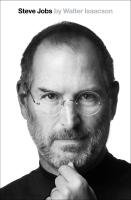
Steve Jobs


Steve Jobs Feature


  • Autograph Copy


Steve Jobs Overview


Based on more than forty interviews with Jobs conducted over two years—as well as interviews with more than a hundred family members, friends, adversaries, competitors, and colleagues—Walter Isaacson has written a riveting story of the roller-coaster life and searingly intense personality of a creative entrepreneur whose passion for perfection and ferocious drive revolutionized six industries: personal computers, animated movies, music, phones, tablet computing, and digital publishing.

At a time when America is seeking ways to sustain its innovative edge, and when societies around the world are trying to build digital-age economies, Jobs stands as the ultimate icon of inventiveness and applied imagination. He knew that the best way to create value in the twenty-first century was to connect creativity with technology. He built a company where leaps of the imagination were combined with remarkable feats of engineering.  

Although Jobs cooperated with this book, he asked for no control over what was written nor even the right to read it before it was published. He put nothing off-limits. He encouraged the people he knew to speak honestly. And Jobs speaks candidly, sometimes brutally so, about the people he worked with and competed against. His friends, foes, and colleagues provide an unvarnished view of the passions, perfectionism, obsessions, artistry, devilry, and compulsion for control that shaped his approach to business and the innovative products that resulted.

Driven by demons, Jobs could drive those around him to fury and despair. But his personality and products were interrelated, just as Apple’s hardware and software tended to be, as if part of an integrated system. His tale is instructive and cautionary, filled with lessons about innovation, character, leadership, and values.

Steve Jobs Specifications


Amazon Best Books of the Month, November 2011: It is difficult to read the opening pages of Walter Isaacson’s Steve Jobs without feeling melancholic. Jobs retired at the end of August and died about six weeks later. Now, just weeks after his death, you can open the book that bears his name and read about his youth, his promise, and his relentless press to succeed. But the initial sadness in starting the book is soon replaced by something else, which is the intensity of the read--mirroring the intensity of Jobs’s focus and vision for his products. Few in history have transformed their time like Steve Jobs, and one could argue that he stands with the Fords, Edisons, and Gutenbergs of the world. This is a timely and complete portrait that pulls no punches and gives insight into a man whose contradictions were in many ways his greatest strength. --Chris Schluep


Amazon Exclusive: A Q&A with Walter Isaacson

Q: It's becoming well known that Jobs was able to create his Reality Distortion Field when it served him. Was it difficult for you to cut through the RDF and get beneath the narrative that he created? How did you do it?

Isaacson: Andy Hertzfeld, who worked with Steve on the original Macintosh team, said that even if you were aware of his Reality Distortion Field, you still got caught up in it. But that is why Steve was so successful: He willfully bent reality so that you became convinced you could do the impossible, so you did. I never felt he was intentionally misleading me, but I did try to check every story. I did more than a hundred interviews. And he urged me not just to hear his version, but to interview as many people as possible. It was one of his many odd contradictions: He could distort reality, yet he was also brutally honest most of the time. He impressed upon me the value of honesty, rather than trying to whitewash things.

Q: How were the interviews with Jobs conducted? Did you ask lots of questions, or did he just talk?

Isaacson: I asked very few questions. We would take long walks or drives, or sit in his garden, and I would raise a topic and let him expound on it. Even during the more formal sessions in his living room, I would just sit quietly and listen. He loved to tell stories, and he would get very emotional, especially when talking about people in his life whom he admired or disdained.

Q: He was a powerful man who could hold a grudge. Was it easy to get others to talk about Jobs willingly? Were they afraid to talk?

Isaacson: Everyone was eager to talk about Steve. They all had stories to tell, and they loved to tell them. Even those who told me about his rough manner put it in the context of how inspiring he could be.

Q: Jobs embraced the counterculture and Buddhism. Yet he was a billionaire businessman with his own jet. In what way did Jobs' contradictions contribute to his success?

Isaacson: Steve was filled with contradictions. He was a counterculture rebel who became a billionaire. He eschewed material objects yet made objects of desire. He talked, at times, about how he wrestled with these contradictions. His counterculture background combined with his love of electronics and business was key to the products he created. They combined artistry and technology.

Q: Jobs could be notoriously difficult. Did you wind up liking him in the end?

Isaacson: Yes, I liked him and was inspired by him. But I knew he could be unkind and rough. These things can go together. When my book first came out, some people skimmed it quickly and cherry-picked the examples of his being rude to people. But that was only half the story. Fortunately, as people read the whole book, they saw the theme of the narrative: He could be petulant and rough, but this was driven by his passion and pursuit of perfection. He liked people to stand up to him, and he said that brutal honesty was required to be part of his team. And the teams he built became extremely loyal and inspired.

Q: Do you believe he was a genius?

Isaacson: He was a genius at connecting art to technology, of making leaps based on intuition and imagination. He knew how to make emotional connections with those around him and with his customers.

Q: Did he have regrets?

Isaacson: He had some regrets, which he expressed in his interviews. For example, he said that he did not handle well the pregnancy of his first girlfriend. But he was deeply satisfied by the creativity he ingrained at Apple and the loyalty of both his close colleagues and his family.

Q: What do you think is his legacy?

Isaacson: His legacy is transforming seven industries: personal computers, animated movies, music, phones, tablet computing, digital publishing, and retail stores. His legacy is creating what became the most valuable company on earth, one that stood at the intersection of the humanities and technology, and is the company most likely still to be doing that a generation from now. His legacy, as he said in his "Think Different" ad, was reminding us that the people who are crazy enough to think they can change the world are the ones who do.

Photo credit: Patrice Gilbert Photography


Low Price @ Amazon

Read more>>>

Friday, September 21, 2012

The Price of Politics


The Price of Politics Overview


Based on 18 months of reporting, Woodward's 17th book The Price of Politics is an intimate, documented examination of how President Obama and the highest profile Republican and Democratic leaders in the United States Congress attempted to restore the American economy and improve the federal government’s fiscal condition over three and one half years. Drawn from memos, contemporaneous meeting notes, emails and in-depth interviews with the central players, The Price of Politics addresses the key issue of the presidential and congressional campaigns: the condition of the American economy and how and why we got there. Providing verbatim, day-by-day, even hour-by-hour accounts, the book shows what really happened, what drove the debates, negotiations and struggles that define, and will continue to define, the American future.


Low Price @ Amazon

Read more>>>

Thursday, September 20, 2012

Bates' Guide to Physical Examination and History Taking, 10th Edition


Bates' Guide to Physical Examination and History Taking, 10th Edition Overview


The Tenth Edition of this classic text provides the best foundation for performing physical examinations and taking patient history. The book features a beautiful full-color art program and a clear, simple two-column format, with highly visual step-by-step examination techniques on the left and abnormalities with differential diagnoses on the right.

This edition's health promotion sections have been extensively updated and expanded in all chapters, with new and revised national guidelines, pertinent screening tools, and more information about ways to help patients prevent disease and optimize their health across all settings and age groups. Detailed information on pain assessment is now included in the general survey, vital signs, and pain chapter. A new chapter presents assessment of mental health status and behavior to encompass the psychosocial dimensions of care. Evidence-based content has been increased, with pertinent findings, avenues for research, and references/suggested readings added across the entire book. More than 50 new line drawings and photos have been added.

A bound-in CD-ROM and companion Website include 5 Approach to Patient videos, 15 Head-to-Toe Examination videos, 25 Assessment videos, heart and breath sounds, the Center for Disease Control's pediatric growth chart, journal articles, Nursing Professional Roles and Responsibilities, and the fully searchable text. An Instructor's Resource DVD-ROM and online instructor resources are also available.


Low Price @ Amazon

Read more>>>

Wednesday, September 19, 2012

This Is How You Lose Her


This Is How You Lose Her Overview


Pulitzer Prize-winner Junot Díaz’s first book, Drown, established him as a major new writer with “the dispassionate eye of a journalist and the tongue of a poet” (Newsweek). His first novel, The Brief Wondrous Life of Oscar Wao, was named #1 Fiction Book of the Year” by Time magazine and spent more than 100 weeks on the New York Times bestseller list, establishing itself – with more than a million copies in print – as a modern classic. In addition to the Pulitzer, Díaz has won a host of major awards and prizes, including the National Book Critic’s Circle Award, the PEN/Malamud Award, the PEN/O. Henry Prize, the Dayton Literary Peace Prize, and the Anisfield-Wolf Award.
 
Now Díaz turns his remarkable talent to the haunting, impossible power of love – obsessive love, illicit love, fading love, maternal love. On a beach in the Dominican Republic, a doomed relationship flounders. In the heat of a hospital laundry room in New Jersey, a woman does her lover’s washing and thinks about his wife. In Boston, a man buys his love child, his only son, a first baseball bat and glove. At the heart of these stories is the irrepressible, irresistible Yunior, a young hardhead whose longing for love is equaled only by his recklessness--and by the extraordinary women he loves and loses: artistic Alma; the aging Miss Lora; Magdalena, who thinks all Dominican men are cheaters; and the love of his life, whose heartbreak ultimately becomes his own. In prose that is endlessly energetic, inventive, tender, and funny, the stories in This Is How You Lose Her lay bare the infinite longing and inevitable weakness of the human heart. They remind us that passion always triumphs over experience, and that “the half-life of love is forever.”


This Is How You Lose Her Specifications


Amazon Best Books of the Month, September 2012:This Is How You Lose Her features nine stories by Junot Diaz, who won the Pulitzer Prize for his novel The Brief Wondrous Life of Oscar Wao in 2008. At the center of each story is Yunior (making his third appearance in Diaz's work), a Dominican American stud who, despite his macho exterior, aches to be loved. At first blush, this slim volume lacks the ambition and scope of Oscar Wao, a condensed pop-culture epic. But Diaz has done an extraordinary thing here: He has taken Yunior's heart and battered it every which way to show how love--romantic, physical, or familial--can affect even the most masculine character. The final story, "The Cheater's Guide to Love," features the collection's stickiest line: "The half-life of love is forever." Diaz compares heartbreak to radiation, its strength decaying exponentially over time. You can bury it underground and try to forget about it, but it never goes away entirely. --Kevin Nguyen


Low Price @ Amazon

Read more>>>

Tuesday, September 18, 2012

The Five Dysfunctions of a Team: A Leadership Fable


The Five Dysfunctions of a Team: A Leadership Fable Feature


  • The Five Dysfunctions of a Team
  • English
  • hardcover
  • First Edition
  • gelatine plate paper


The Five Dysfunctions of a Team: A Leadership Fable Overview


In The Five Dysfunctions of a Team Patrick Lencioni once again offers a leadership fable that is as enthralling and instructive as his first two best-selling books, The Five Temptations of a CEO and The Four Obsessions of an Extraordinary Executive. This time, he turns his keen intellect and storytelling power to the fascinating, complex world of teams.

Kathryn Petersen, Decision Tech's CEO, faces the ultimate leadership crisis: Uniting a team in such disarray that it threatens to bring down the entire company. Will she succeed? Will she be fired? Will the company fail? Lencioni's utterly gripping tale serves as a timeless reminder that leadership requires as much courage as it does insight.

Throughout the story, Lencioni reveals the five dysfunctions which go to the very heart of why teams even the best ones-often struggle. He outlines a powerful model and actionable steps that can be used to overcome these common hurdles and build a cohesive, effective team. Just as with his other books, Lencioni has written a compelling fable with a powerful yet deceptively simple message for all those who strive to be exceptional team leaders.

The Five Dysfunctions of a Team: A Leadership Fable Specifications


Once again using an astutely written fictional tale to unambiguously but painlessly deliver some hard truths about critical business procedures, Patrick Lencioni targets group behavior in the final entry of his trilogy of corporate fables. And like those preceding it, The Five Dysfunctions of a Team is an entertaining, quick read filled with useful information that will prove easy to digest and implement. This time, Lencioni weaves his lessons around the story of a troubled Silicon Valley firm and its unexpected choice for a new CEO: an old-school manager who had retired from a traditional manufacturing company two years earlier at age 55. Showing exactly how existing personnel failed to function as a unit, and precisely how the new boss worked to reestablish that essential conduct, the book's first part colorfully illustrates the ways that teamwork can elude even the most dedicated individuals--and be restored by an insightful leader. A second part offers details on Lencioni's "five dysfunctions" (absence of trust, fear of conflict, lack of commitment, avoidance of accountability, and inattention to results), along with a questionnaire for readers to use in evaluating their own teams and specifics to help them understand and overcome these common shortcomings. Like the author's previous books, The Five Temptations of a CEO and Obsessions of an Extraordinary Executive, this is highly recommended. --Howard Rothman


Low Price @ Amazon

Read more>>>

Monday, September 17, 2012

Chemistry: A Molecular Approach (2nd US Edition)


Chemistry: A Molecular Approach (2nd US Edition) Overview


This innovative text explains difficult concepts in a relevant, student-oriented manner.  Chemistry is presented visually through multi-level images—macroscopic, molecular and symbolic representations—helping you see the connections among the formulas (symbolic), the world around you (macroscopic), and the atoms and molecules that make up the world (molecular). Among other revisions, the Second Edition offers a crisp new design, adds more challenging problems, and significantly revises coverage of electrochemistry.
 
This is just the standalone book if you want the book/access kit order:

0321706153 / 9780321706157 Chemistry: A Molecular Approach with MasteringChemistry®

Package consists of:   

0321651782 / 9780321651785 Chemistry: A Molecular Approach

0321695348 / 9780321695345 MasteringChemistry® with Pearson eText Student Access Kit for Chemistry: A Molecular Approach


Low Price @ Amazon

Read more>>>

Sunday, September 16, 2012

Pathophysiology: The Biologic Basis for Disease in Adults and Children, 6e


Pathophysiology: The Biologic Basis for Disease in Adults and Children, 6e Overview


Well-known for its authoritative and comprehensive coverage, complete treatment of pediatric pathophysiology, and the most extensive illustration program in its field, this textbook features expert content on everything from the general principles of pathophysiology to detailed discussions of genetics and specific diseases. Chapters on alteration present the pathophysiology, clinical manifestations, and evaluation and treatment of each disease to help you learn to identify normal anatomy and physiology, as well as alterations of function in adults and in children.

  • Unparalleled coverage of disease processes makes this text the most comprehensive pathophysiology text available.
  • The largest full-color art program in the field illustrates the clinical manifestations of diseases and disease processes
  • Consistent presentations of each disease with pathophysiology, clinical manifestations, and evaluation and treatment help you find the information you need quickly and easily.
  • Ten separate pediatric chapters cover the pathophysiologic effects on children.
  • Aging content is highlighted throughout the text.
  • An Introduction to Pathophysiology section at the beginning of the text provides a solid start to the basics of the study of disease.
  • Algorithms and flowcharts of diseases and disorders illustrate the disease process in an easy-to-understand format.
  • Nutrition and Disease boxes present evidence-based information on the relationship between health promotion through diet and disease.
  • Updated content on leukocytes in pain modulation, seizure disorders, brain injuries and disorders, acute encephalopathies, reproductive disorders, and much more keep you at the cutting edge of this constantly changing field.
  • What's New? boxes highlight the most current research and findings to ensure you have the most up-to-date information.
  • New animations, review questions, Key Points, and an audio glossary have been added to the Evolve companion website to strengthen your understanding of key concepts.
  • Media Resources Lists encourage you to develop a study plan to master the important content in each chapter.


Low Price @ Amazon

Read more>>>

Saturday, September 15, 2012

Diagnostic and Statistical Manual of Mental Disorders DSM-IV-TR Fourth Edition (Text Revision)


Diagnostic and Statistical Manual of Mental Disorders DSM-IV-TR Fourth Edition (Text Revision) Feature


  • ISBN13: 9780890420256
  • Notes: 100% Satisfaction Guarantee. Tracking provided on most orders. Buy with Confidence! Millions of books sold!


Diagnostic and Statistical Manual of Mental Disorders DSM-IV-TR Fourth Edition (Text Revision) Overview


Since the DSM-IV® was published in 1994, we’ve seen many advances in our knowledge of psychiatric illness. This Text Revision incorporates information culled from a comprehensive literature review of research about mental disorders published since DSM-IV® was completed in 1994. Updated information is included about the associated features, culture, age, and gender features, prevalence, course, and familial pattern of mental disorders.

The DSM-IV® brings this essential diagnostic tool up-to-date, to promote effective diagnosis, treatment, and quality of care. Now you can get all the essential diagnostic information you rely on from the DSM-IV® along with important updates not found in the 1994 edition.

Stay current with important updates to the DSM-IV®:

• Benefit from new research into Schizophrenia, Asperger’s Disorder, and other conditions
• Utilize additional information about the epidemiology and other facets of DSM conditions
• Update ICD-9-CM codes implemented since 1994 (including Conduct Disorder, Dementia, Somatoform Disorders)

DSM-IV-TR, the handheld version of the Diagnostic and Statistical Manual of Mental Disorders, Fourth Edition, Text Revision, is now available for both Palm OS and PocketPC handhelds. This Text Revision incorporates information culled from a comprehensive literature review of research about mental disorders and includes associated features, culture, age, and gender features, prevalence, course, and familial pattern of mental disorders. And with Skyscape's patented smARTlink™ technology, DSM-IV-TR can easily cross-index with other clinical and drug prescription products from Skyscape to provide a powerful and integrated source of clinical information that you can carry with you wherever you go!


Low Price @ Amazon

Read more>>>

Friday, September 14, 2012

Publication Manual of the American Psychological Association, Sixth Edition


Publication Manual of the American Psychological Association, Sixth Edition Feature


  • duplicate publication, plagiarism and self-plagiarism
  • electronic presentation of data
  • discussion of the publication process
  • lengthy data sets
  • digital object identifier (DOI)


Publication Manual of the American Psychological Association, Sixth Edition Overview


The "Publication Manual" is the style manual of choice for writers, editors, students, and educators. Although it is specifically designed to help writers in the behavioral sciences and social sciences, anyone who writes non-fiction prose can benefit from its guidance. The newly-revised Sixth Edition has not only been rewritten. It has also been thoroughly rethought and reorganized, making it the most user-friendly "Publication Manual" the APA has ever produced. You will be able to find answers to your questions faster than ever before. When you need advice on how to present information, including text, data, and graphics, for publication in any type of format--such as college and university papers, professional journals, presentations for colleagues, and online publication--you will find the advice you're looking for in the "Publication Manual."


Low Price @ Amazon

Read more>>>

Thursday, September 13, 2012

Principles of Anatomy and Physiology (Tortora, Principles of Anatomy and Physiology)


Principles of Anatomy and Physiology (Tortora, Principles of Anatomy and Physiology) Overview


The thirteenth edition of the phenomenally successful Principles of Anatomy and Physiology continues to set the standard for the discipline. The authors maintained a superb balance between structure and function and continue to emphasize the correlations between normal physiology and pathophysiology, normal anatomy and pathology, and homeostasis and homeostatic imbalances. The acclaimed illustration program continues to be refined and is unsurpassed in the market. The thirteenth edition is fully integrated with a host of innovative electronic media, including WileyPlus 5.0 (access purchased separately.) No other text and package offers a teaching and learning environment as rich and complete.

Principles of Anatomy and Physiology (Tortora, Principles of Anatomy and Physiology) Specifications


Five Interesting Functions of the Human Body
  • Most forms of color blindness, an inherited inability to distinguish between certain colors, result from the absence or deficiency of one of the types of cones. The most common type is red-green color blindness, in which red cones or green cones are missing. As a result, the person cannot distinguish between red and green. Prolonged vitamin A deficiency and the resulting below-normal amount of rhodopsin may cause night blindness or nyctalopia, an inability to see well at low light levels.

  • Women often have a keener sense of smell than men do, especially at the time of ovulation. Smoking seriously impairs the sense of smell in the short term and may cause long-term damage to olfactory receptors. With aging the sense of smell deteriorates. Hyposmia, a reduced ability to smell, affects half of those over age 65 and 75% of those over age 80. Hyposmia also can be caused by neurological changes, such as a head injury, Alzheimer disease, or Parkinson disease; certain drugs, such as antihistamines, analgesics, or steroids; and the damaging effects of smoking.

  • Damage to the cerebellum can result in a loss of ability to coordinate muscular movements, a condition called ataxia. Blindfolded people with ataxia cannot touch the tip of their nose with their finger because they cannot coordinate movement with their sense of where a body part is located. Another sign of ataxia is a changed speech pattern due to uncoordinated speech muscles. Cerebellar damage may also result in staggering or abnormal walking movements. People who consume too much alcohol show signs of ataxia because alcohol inhibits activity of the cerebellum. Such individuals have difficulty in passing sobriety tests. Ataxia can also occur as a result of degenerative diseases (multiple sclerosis and Parkinson disease), trauma, brain tumors, and genetic factors, and as a side effect of medication prescribed for bipolar disorder.

  • After death, the cellular membranes become leaky. Calcium ions leak out of the sarcoplasmic reticulum into the sarcoplasm and allow myosin heads to bind to actin. ATP synthesis ceases shortly after breathing stops, however, so the cross-bridges cannot detach from actin. The resulting condition, in which muscles are in a state of rigidity (cannot contract or stretch), is called rigor mortis (rigidity of death). Rigor mortis begins 3-4 hours after death and lasts about 24 hours; then it disappears as proteolytics enzymes from lysosomes digest the cross-bridges.

  • A dislocated mandible can occur in several ways. Anterior displacements are the most common and occur when the condylar processes of the mandible pass anterior to the articular tubercles. Common causes are extreme mouth opening, as in yawning or taking a large bite, dental procedures, or general anesthesia. Posterior displacement can be caused by a direct blow to the chin. Superior displacements can be caused by a direct blow to the chin. Superior displacements are typically caused by a direct blow to a partially opened mouth. Lateral dislocations are usually associated with mandibular fractures.


Low Price @ Amazon

Read more>>>

Wednesday, September 12, 2012

The Third Wheel (Diary of a Wimpy Kid, Book 7)


The Third Wheel (Diary of a Wimpy Kid, Book 7) Overview


Love is in the air—but what does that mean for Greg Heffley?

A Valentine’s Day dance at Greg’s middle school has turned his world upside down. As Greg scrambles to find a date, he’s worried he’ll be left out in the cold on the big night. His best friend, Rowley, doesn’t have any prospects either, but that’s a small consolation.

An unexpected twist gives Greg a partner for the dance and leaves Rowley the odd man out. But a lot can happen in one night, and in the end, you never know who’s going to be lucky in love.


Low Price @ Amazon

Read more>>>

Tuesday, September 11, 2012

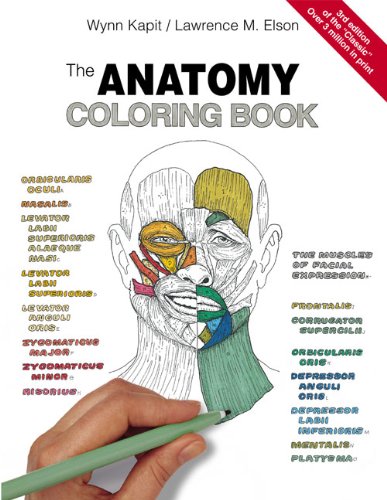
The Anatomy Coloring Book


The Anatomy Coloring Book Feature


  • Great drawing examples inside, neatly colored
  • Book is in good condition


The Anatomy Coloring Book Overview


For over 23 years, The Anatomy Coloring Book has been the leading human anatomy coloring book, offering concisely written text and precise, extraordinary hand-drawn figures. Organized according to body systems, each of the 170 plates featured in this book includes an ingenious color-key system anatomical terminology is linked to detail illustration of the structures of the body.


Low Price @ Amazon

Read more>>>

Sunday, September 9, 2012

Things Fall Apart


Things Fall Apart Overview


Things Fall Apart tells two intertwining stories, both centering on Okonkwo, a “strong man” of an Ibo village in Nigeria. The first, a powerful fable of the immemorial conflict between the individual and society, traces Okonkwo’s fall from grace with the tribal world. The second, as modern as the first is ancient, concerns the clash of cultures and the destruction of Okonkwo's world with the arrival of aggressive European missionaries. These perfectly harmonized twin dramas are informed by an awareness capable of encompassing at once the life of nature, human history, and the mysterious compulsions of the soul.

Things Fall Apart Specifications


One of Chinua Achebe's many achievements in his acclaimed first novel, Things Fall Apart, is his relentlessly unsentimental rendering of Nigerian tribal life before and after the coming of colonialism. First published in 1958, just two years before Nigeria declared independence from Great Britain, the book eschews the obvious temptation of depicting pre-colonial life as a kind of Eden. Instead, Achebe sketches a world in which violence, war, and suffering exist, but are balanced by a strong sense of tradition, ritual, and social coherence. His Ibo protagonist, Okonkwo, is a self-made man. The son of a charming ne'er-do-well, he has worked all his life to overcome his father's weakness and has arrived, finally, at great prosperity and even greater reputation among his fellows in the village of Umuofia. Okonkwo is a champion wrestler, a prosperous farmer, husband to three wives and father to several children. He is also a man who exhibits flaws well-known in Greek tragedy:
Okonkwo ruled his household with a heavy hand. His wives, especially the youngest, lived in perpetual fear of his fiery temper, and so did his little children. Perhaps down in his heart Okonkwo was not a cruel man. But his whole life was dominated by fear, the fear of failure and of weakness. It was deeper and more intimate than the fear of evil and capricious gods and of magic, the fear of the forest, and of the forces of nature, malevolent, red in tooth and claw. Okonkwo's fear was greater than these. It was not external but lay deep within himself. It was the fear of himself, lest he should be found to resemble his father.
And yet Achebe manages to make this cruel man deeply sympathetic. He is fond of his eldest daughter, and also of Ikemefuna, a young boy sent from another village as compensation for the wrongful death of a young woman from Umuofia. He even begins to feel pride in his eldest son, in whom he has too often seen his own father. Unfortunately, a series of tragic events tests the mettle of this strong man, and it is his fear of weakness that ultimately undoes him.

Achebe does not introduce the theme of colonialism until the last 50 pages or so. By then, Okonkwo has lost everything and been driven into exile. And yet, within the traditions of his culture, he still has hope of redemption. The arrival of missionaries in Umuofia, however, followed by representatives of the colonial government, completely disrupts Ibo culture, and in the chasm between old ways and new, Okonkwo is lost forever. Deceptively simple in its prose, Things Fall Apart packs a powerful punch as Achebe holds up the ruin of one proud man to stand for the destruction of an entire culture. --Alix Wilber


Low Price @ Amazon

Read more>>>

Saturday, September 8, 2012

Gone Girl: A Novel


Gone Girl: A Novel Overview


Marriage can be a real killer. 
   One of the most critically acclaimed suspense writers of our time, New York Times bestseller Gillian Flynn takes that statement to its darkest place in this unputdownable masterpiece about a marriage gone terribly, terribly wrong. The Chicago Tribune proclaimed that her work “draws you in and keeps you reading with the force of a pure but nasty addiction.” Gone Girl’s toxic mix of sharp-edged wit and deliciously chilling prose creates a nerve-fraying thriller that confounds you at every turn. 
   On a warm summer morning in North Carthage, Missouri, it is Nick and Amy Dunne’s fifth wedding anniversary. Presents are being wrapped and reservations are being made when Nick’s clever and beautiful wife disappears from their rented McMansion on the Mississippi River. Husband-of-the-Year Nick isn’t doing himself any favors with cringe-worthy daydreams about the slope and shape of his wife’s head, but passages from Amy's diary reveal the alpha-girl perfectionist could have put anyone dangerously on edge. Under mounting pressure from the police and the media—as well as Amy’s fiercely doting parents—the town golden boy parades an endless series of lies, deceits, and inappropriate behavior. Nick is oddly evasive, and he’s definitely bitter—but is he really a killer? 
   As the cops close in, every couple in town is soon wondering how well they know the one that they love. With his twin sister, Margo, at his side, Nick stands by his innocence. Trouble is, if Nick didn’t do it, where is that beautiful wife? And what was in that silvery gift box hidden in the back of her bedroom closet?
   With her razor-sharp writing and trademark psychological insight, Gillian Flynn delivers a fast-paced, devilishly dark, and ingeniously plotted thriller that confirms her status as one of the hottest writers around.


Gone Girl: A Novel Specifications


Amazon Best Books of the Month, June 2012: On the day of their fifth wedding anniversary, Nick's wife Amy disappears. There are signs of struggle in the house and Nick quickly becomes the prime suspect. It doesn't help that Nick hasn't been completely honest with the police and, as Amy's case drags out for weeks, more and more vilifying evidence appears against him. Nick, however, maintains his innocence. Told from alternating points of view between Nick and Amy, Gillian Flynn creates an untrustworthy world that changes chapter-to-chapter. Calling Gone Girl a psychological thriller is an understatement. As revelation after revelation unfolds, it becomes clear that the truth does not exist in the middle of Nick and Amy's points of view; in fact, the truth is far more dark, more twisted, and more creepy than you can imagine. Gone Girl is masterfully plotted from start to finish and the suspense doesn't waver for one page. It's one of those books you will feel the need to discuss immediately after finishing because the ending doesn't just come; it punches you in the gut. --Caley Anderson

From Author Gillian Flynn

You might say I specialize in difficult characters. Damaged, disturbed, or downright nasty. Personally, I love each and every one of the misfits, losers, and outcasts in my three novels. My supporting characters are meth tweakers, truck-stop strippers, backwoods grifters ...

But it's my narrators who are the real challenge.

In Sharp Objects, Camille Preaker is a mediocre journalist fresh from a stay at a psychiatric hospital. She's an alcoholic. She's got impulse issues. She's also incredibly lonely. Her best friend is her boss. When she returns to her hometown to investigate a child murder, she parks down the street from her mother's house "so as to seem less obtrusive." She has no sense of whom to trust, and this leads to disaster.

Camille is cut off from the world but would rather not be. In Dark Places, narrator Libby Day is aggressively lonely. She cultivates her isolation. She lives off a trust fund established for her as a child when her family was massacred; she isn't particularly grateful for it. She's a liar, a manipulator, a kleptomaniac. "I have a meanness inside me, real as an organ," she warns. "Draw a picture of my soul and it'd be a scribble with fangs." If Camille is overly grateful when people want to befriend her, Libby's first instinct is to kick them in their shins.

In those first two novels, I explored the geography of loneliness--and the devastation it can lead to. With Gone Girl, I wanted to go the opposite direction: what happens when two people intertwine their lives completely.I wanted to explore the geography of intimacy--and the devastation it can lead to. Marriage gone toxic.

Gone Girl opens on the occasion of Amy and Nick Dunne's fifth wedding anniversary. (How romantic.) Amy disappears under very disturbing circumstances. (Less romantic.) Nick and Amy Dunne were the golden couple when they first began their courtship. Soul mates. They could complete each other's sentences, guess each other's reactions. They could push each other's buttons. They are smart, charming, gorgeous, and also narcissistic, selfish, and cruel.

They complete each other--in a very dangerous way.


Low Price @ Amazon

Read more>>>

Friday, September 7, 2012

Biological Science (4th Edition)


Biological Science (4th Edition) Overview


Supports and motivates you as you learn to think like a biologist.


Building upon Scott Freeman’s unique narrative style that incorporates the Socratic approach and draws you into thinking like a biologist, the Fourth Edition has been carefully refined to motivate and support a broader range of learners as they are introduced to new concepts and encouraged to develop and practice new skills. Each page of the book is designed in the spirit of active learning and instructional reinforcement, equipping novice learners with tools that help them advance in the course—from recognizing essential information in highlighted sections to demonstrating and applying their understanding of concepts in practice exercises that gradually build in difficulty.    


Low Price @ Amazon

Read more>>>

Thursday, September 6, 2012

Unbroken: A World War II Story of Survival, Resilience, and Redemption


Unbroken: A World War II Story of Survival, Resilience, and Redemption Feature


  • Unbroken
  • A World War II Story of Survival, Resilience, and Redemption
  • Laura hillenbrand


Unbroken: A World War II Story of Survival, Resilience, and Redemption Overview


On a May afternoon in 1943, an Army Air Forces bomber crashed into the Pacific Ocean and disappeared, leaving only a spray of debris and a slick of oil, gasoline, and blood.  Then, on the ocean surface, a face appeared.  It was that of a young lieutenant, the plane’s bombardier, who was struggling to a life raft and pulling himself aboard.  So began one of the most extraordinary odysseys of the Second World War.

The lieutenant’s name was Louis Zamperini.  In boyhood, he’d been a cunning and incorrigible delinquent, breaking into houses, brawling, and fleeing his home to ride the rails.  As a teenager, he had channeled his defiance into running, discovering a prodigious talent that had carried him to the Berlin Olympics and within sight of the four-minute mile.  But when war had come, the athlete had become an airman, embarking on a journey that led to his doomed flight, a tiny raft, and a drift into the unknown.

Ahead of Zamperini lay thousands of miles of open ocean, leaping sharks, a foundering raft, thirst and starvation, enemy aircraft, and, beyond, a trial even greater.  Driven to the limits of endurance, Zamperini would answer desperation with ingenuity; suffering with hope, resolve, and humor; brutality with rebellion.  His fate, whether triumph or tragedy, would be suspended on the fraying wire of his will.

In her long-awaited new book, Laura Hillenbrand writes with the same rich and vivid narrative voice she displayed in Seabiscuit.  Telling an unforgettable story of a man’s journey into extremity, Unbroken is a testament to the resilience of the human mind, body, and spirit.

Unbroken: A World War II Story of Survival, Resilience, and Redemption Specifications


Amazon Best Books of the Month, November 2010: From Laura Hillenbrand, the bestselling author of Seabiscuit, comes Unbroken, the inspiring true story of a man who lived through a series of catastrophes almost too incredible to be believed. In evocative, immediate descriptions, Hillenbrand unfurls the story of Louie Zamperini--a juvenile delinquent-turned-Olympic runner-turned-Army hero. During a routine search mission over the Pacific, Louie’s plane crashed into the ocean, and what happened to him over the next three years of his life is a story that will keep you glued to the pages, eagerly awaiting the next turn in the story and fearing it at the same time. You’ll cheer for the man who somehow maintained his selfhood and humanity despite the monumental degradations he suffered, and you’ll want to share this book with everyone you know. --Juliet Disparte

The Story of Unbroken by Laura Hillenbrand

Eight years ago, an old man told me a story that took my breath away. His name was Louie Zamperini, and from the day I first spoke to him, his almost incomprehensibly dramatic life was my obsession.

It was a horse--the subject of my first book, Seabiscuit: An American Legend--who led me to Louie. As I researched the Depression-era racehorse, I kept coming across stories about Louie, a 1930s track star who endured an amazing odyssey in World War II. I knew only a little about him then, but I couldn’t shake him from my mind. After I finished Seabiscuit, I tracked Louie down, called him and asked about his life. For the next hour, he had me transfixed.

Growing up in California in the 1920s, Louie was a hellraiser, stealing everything edible that he could carry, staging elaborate pranks, getting in fistfights, and bedeviling the local police. But as a teenager, he emerged as one of the greatest runners America had ever seen, competing at the 1936 Berlin Olympics, where he put on a sensational performance, crossed paths with Hitler, and stole a German flag right off the Reich Chancellery. He was preparing for the 1940 Olympics, and closing in on the fabled four-minute mile, when World War II began. Louie joined the Army Air Corps, becoming a bombardier. Stationed on Oahu, he survived harrowing combat, including an epic air battle that ended when his plane crash-landed, some six hundred holes in its fuselage and half the crew seriously wounded.

On a May afternoon in 1943, Louie took off on a search mission for a lost plane. Somewhere over the Pacific, the engines on his bomber failed. The plane plummeted into the sea, leaving Louie and two other men stranded on a tiny raft. Drifting for weeks and thousands of miles, they endured starvation and desperate thirst, sharks that leapt aboard the raft, trying to drag them off, a machine-gun attack from a Japanese bomber, and a typhoon with waves some forty feet high. At last, they spotted an island. As they rowed toward it, unbeknownst to them, a Japanese military boat was lurking nearby. Louie’s journey had only just begun.

That first conversation with Louie was a pivot point in my life. Fascinated by his experiences, and the mystery of how a man could overcome so much, I began a seven-year journey through his story. I found it in diaries, letters and unpublished memoirs; in the memories of his family and friends, fellow Olympians, former American airmen and Japanese veterans; in forgotten papers in archives as far-flung as Oslo and Canberra. Along the way, there were staggering surprises, and Louie’s unlikely, inspiring story came alive for me. It is a tale of daring, defiance, persistence, ingenuity, and the ferocious will of a man who refused to be broken.

The culmination of my journey is my new book, Unbroken: A World War II Story of Survival, Resilience, and Redemption. I hope you are as spellbound by Louie’s life as I am.


Low Price @ Amazon

Read more>>>

Wednesday, September 5, 2012

Atlas of Human Anatomy: with Student Consult Access, 5e (Netter Basic Science)


Atlas of Human Anatomy: with Student Consult Access, 5e (Netter Basic Science) Overview


Atlas of Human Anatomy uses Frank H. Netter, MD's detailed illustrations to demystify this often intimidating subject, providing a coherent, lasting visual vocabulary for understanding anatomy and how it applies to medicine. This fifth edition features a stronger clinical focus-with new diagnostic imaging examples--making it easier to correlate anatomy with practice. Student Consult online access includes supplementary learning resources, from additional illustrations to an anatomy dissection guide and more. Netter. It's how you know.

  • See anatomy from a clinical perspective with hundreds of exquisite, hand-painted illustrations created by, and in the tradition of, pre-eminent medical illustrator Frank H. Netter, MD.
  • Join the global community of healthcare professionals who've mastered anatomy the Netter way!
  • Expand your study at Student Consult online, where you'll find a suite of learning aids including selected Netter illustrations, additional clinically focused illustrations and radiologic images, videos from Netter's 3D Interactive Anatomy, dissection modules, an anatomy dissection guide, multiple-choice review questions, "drag-and-drop" exercises, clinical pearls, clinical cases, survival guides, surgical procedures, and more.
  • Correlate anatomy with practice through an increased clinical focus, many new diagnostic imaging examples, and bonus clinical illustrations and guides online.


Low Price @ Amazon

Read more>>>

Monday, September 3, 2012

Lehninger Principles of Biochemistry


Lehninger Principles of Biochemistry Overview


Authors Dave Nelson and Mike Cox combine the best of the laboratory and best of the classroom, introducing exciting new developments while communicating basic principles of biochemistry.


Low Price @ Amazon

Read more>>>

Sunday, September 2, 2012

Foundations of Psychiatric Mental Health Nursing: A Clinical Approach, 6e


Foundations of Psychiatric Mental Health Nursing: A Clinical Approach, 6e Overview


The 6th edition of this market-leading textbook offers a clear, straightforward way to understand the often intimidating subject of psychiatric mental health nursing. Its practical, clinical perspective and user-friendly writing style help you quickly master key concepts. Clinical chapters follow the nursing process framework and progress from theory to application with a wealth of real-world examples to prepare you for practice.

  • UNIQUE! A conversational, user-friendly writing style helps you quickly grasp complex psychiatric mental health nursing concepts.
  • Clinical chapters are logically and consistently organized with sections on the clinical picture, epidemiology, comorbidity, etiology, and application of the nursing process.
  • Clinical chapters follow the nursing process, providing you with consistent guidelines for comprehensive assessment and intervention.
  • Vignettes prepare you for real-world practice with personal, descriptive characterizations of patients with specific psychiatric disorders.
  • Coverage of psychopharmacology in clinical chapters familiarizes you with specific drug treatment options, including the most commonly used drugs and important nursing considerations for their use.
  • Assessment Guidelines boxes list essential guidelines for comprehensive patient assessment.
  • Case Studies with Nursing Care Plans present individualized histories of patients with specific psychiatric disorders and include interventions with rationales and evaluation statements for each patient goal.
  • A separate chapter on cultural implications, as well as Considering Culture boxes throughout the text, provides essential information on culture, worldviews, and techniques for providing culturally competent care.
  • Coverage of treatment and recovery in the community addresses the need for successful ongoing psychiatric mental health nursing care in the community setting.
  • A chapter on end-of-life care examines the psychological impact of terminal illness and death on patients, families, and nurses.
  • Updated nursing process and clinical chapters keep you current with the latest ANA Psychiatric-Mental Health Nursing: Scope and Standards of Practice.
  • An increased focus on health promotion and recovery reflects federal, state, and local initiatives to improve screening methods, patient and family teaching, rehabilitation, and community treatment options for people who have mental illnesses.
  • Enhanced Evidence-Based Practice boxes emphasize the profound impact of research-and your potential role in that process-on the advancement of psychiatric treatment options.
  • A new chapter on sleep disorders covers the most common sleep disturbances and their relationships to psychiatric illness, as well as the nurse's role in their assessment and management.
  • A new chapter on sexual dysfunction and sexual disorders examines the complex issue of sexual behavior and provides the information you need to conduct a sexual assessment, identify sexual dysfunctions and disorders, recognize nursing implications, and formulate interventions.


Low Price @ Amazon

Read more>>>

Saturday, September 1, 2012

"They Say / I Say": The Moves That Matter in Academic Writing with Readings (Second Edition)


"They Say / I Say": The Moves That Matter in Academic Writing with Readings (Second Edition) Overview


The best-selling text/reader on academic writing.

They Say / I Say demystifies academic writing by identifying its key rhetorical moves, the most important of which is to summarize what others have said ("they say") to set up one's own argument ("I say"). The book also provides templates to help students make these key moves in their own writing. This version includes readings that demonstrate those moves—and provide stimulating conversations for them to enter. The Second Edition includes an anthology of 44 readings that will provoke students to think—and write—about five important issues, including two new ones: Is Higher Education Worth the Price? and Why Does It Matter Who Wins the Big Game?


Low Price @ Amazon

Read more>>>