Saturday, June 25, 2011

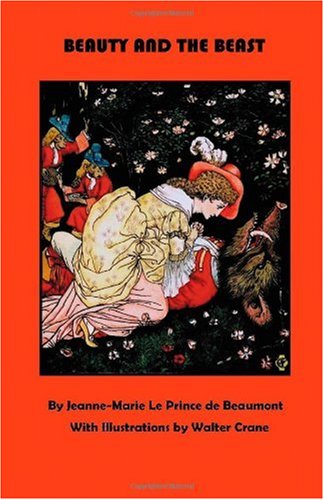
Beauty and the Beast: Beauty and the Beast A TALE FOR THE ENTERTAINMENT OF JUVENILE READERS


Beauty and the Beast: Beauty and the Beast A TALE FOR THE ENTERTAINMENT OF JUVENILE READERS Feature


  • ISBN13: 9781450598989
  • Condition: New
  • Notes: BRAND NEW FROM PUBLISHER! 100% Satisfaction Guarantee. Tracking provided on most orders. Buy with Confidence! Millions of books sold!


Beauty and the Beast: Beauty and the Beast A TALE FOR THE ENTERTAINMENT OF JUVENILE READERS Overview


Beauty and the Beast By Marie Le Prince de Beaumont BEAUTY AND THE BEAST. A TALE FOR THE ENTERTAINMENT OF JUVENILE READERS. With Illustrations by Crane, Walter. Beauty and the Beast. London: George Routledge and Sons, 1874.


Low Price @ Amazon

Read more>>>

Thursday, June 23, 2011

A Knight to Remember (Blood Sword Legacy)


A Knight to Remember (Blood Sword Legacy) Overview


Eight mercenary knights, each of them base born, each of them bound by unspeakable torture in a Saracen prison, each of them branded with the mark of the sword for life. Each of their destinies marked by a woman.

‘Twas whispered along the Marches the demon knights who rode upon black horses donned in black mail wielding black swords would slay any man, woman or child who dared look upon them. ‘Twas whispered their loyalty was only to the other and no man could split them asunder, nor was there enough gold or silver in the kingdom to buy their oath. ‘Twas well known each of them was touched not by the hand of God but by Lucifer himself.

‘Twas also whispered, but only by the bravest of souls, that each Blood Sword was destined to find only one woman in all of Christendom who would bear him and only him sons, and until that one woman was found, he would battle and ravage the land...

(Rhodri and Mercia's story)

Includes bonus content: excerpt from MASTER OF SURRENDER

REVIEWS

"Sumptuous, Sexy, Superb! If you've been waiting for the perfect Medieval series, this is it. Karin Tabke does for Norman knights what JR Ward has done for vampires, with hot alpha heroes and the fiery heroines who tame them. I can't wait for the next book!" -- Monica McCarty, New York Times Bestselling author

ABOUT THE AUTHOR

Award-winning author Karin Tabke isn't just another author with steamy stories to tell, but a cop's wife who has "seen it all and heard it all." Some of the hottest stories come from behind the blue wall of law enforcement rather than from in front. Married to a street cop, now retired, Karin is intimate with both and proves it with her sizzling tales of hot cops. Not only are her cops hot, but so are her sexy knights and bad boy lycans. Karin's Blood Sword Legacy series is a must read for anyone who loves tales of yore when men were men and women were women, and love did conqueror all. Her dark, erotic Blood Moon Rising paranormal trilogy is best described as "Sons of Anarchy meets Rise of Lycans." Her L.O.S.T. series (w/a Karin Harlow) is paranormal romantic suspense at its "chilling and sizzling" best. You don't want to miss any of Karin's deliciously edgy tales of danger and passion!


Low Price @ Amazon

Read more>>>

Wednesday, June 22, 2011

Erotique


Erotique Overview


What’s your fantasy? Exhibitionism, voyeurism, S&M, D/s, bondage and spanking, ménages, orgies…For Dani, it’s being bold and brazen enough to have sex before an audience. The thrill of performing empowers her. The idea of others being titillated by witnessing her intimate gratification excites her. Mikael has given her an extravagant present, a trip to Pigalle—Paris’ notorious red light district—where they will satisfy her wildest fantasy and perhaps discover a few new ones along the way.Note: This story contains voyeuristic hot man lovin’ and exhibitionism that will get you all worked up.


Low Price @ Amazon

Read more>>>

Monday, June 20, 2011

The Post-American World: Release 2.0


The Post-American World: Release 2.0 Overview


The New York Times bestseller, revised and expanded with a new afterword: the essential update of Fareed Zakaria's international bestseller about America and its shifting position in world affairs.

Fareed Zakaria’s international bestseller The Post-American World pointed to the “rise of the rest”—the growth of countries like China, India, Brazil, and others—as the great story of our time, the story that will undoubtedly shape the future of global power. Since its publication, the trends he identified have proceeded faster than anyone could have anticipated. The 2008 financial crisis turned the world upside down, stalling the United States and other advanced economies. Meanwhile emerging markets have surged ahead, coupling their economic growth with pride, nationalism, and a determination to shape their own future.

In this new edition, Zakaria makes sense of this rapidly changing landscape. With his customary lucidity, insight, and imagination, he draws on lessons from the two great power shifts of the past 500 years—the rise of the Western world and the rise of the United States—to tell us what we can expect from the third shift, the “rise of the rest.” The great challenge for Britain was economic decline. The challenge for America now is political decline, for as others have grown in importance, the central role of the United States, especially in the ascendant emerging markets, has already begun to shrink. As Zakaria eloquently argues, Washington needs to begin a serious transformation of its global strategy, moving from its traditional role of dominating hegemon to that of a more pragmatic, honest broker. It must seek to share power, create coalitions, build legitimacy, and define the global agenda—all formidable tasks.

None of this will be easy for the greatest power the world has ever known—the only power that for so long has really mattered. America stands at a crossroads: In a new global era where the United States no longer dominates the worldwide economy, orchestrates geopolitics, or overwhelms cultures, can the nation continue to thrive?

The Post-American World: Release 2.0 Specifications


Book Description
"This is not a book about the decline of America, but rather about the rise of everyone else." So begins Fareed Zakaria's important new work on the era we are now entering. Following on the success of his best-selling The Future of Freedom, Zakaria describes with equal prescience a world in which the United States will no longer dominate the global economy, orchestrate geopolitics, or overwhelm cultures. He sees the "rise of the rest"—the growth of countries like China, India, Brazil, Russia, and many others—as the great story of our time, and one that will reshape the world. The tallest buildings, biggest dams, largest-selling movies, and most advanced cell phones are all being built outside the United States. This economic growth is producing political confidence, national pride, and potentially international problems. How should the United States understand and thrive in this rapidly changing international climate? What does it mean to live in a truly global era? Zakaria answers these questions with his customary lucidity, insight, and imagination.


Thomas Friedman and Fareed Zakaria: Author One-to-One

Fareed Zakaria: Your book is about two things, the climate crisis and also about an American crisis. Why do you link the two?  Fareed Zakaria

Thomas Friedman: You're absolutely right--it is about two things. The book says, America has a problem and the world has a problem. The world's problem is that it's getting hot, flat and crowded and that convergence--that perfect storm--is driving a lot of negative trends. America's problem is that we've lost our way--we've lost our groove as a country. And the basic argument of the book is that we can solve our problem by taking the lead in solving the world's problem.

Zakaria: Explain what you mean by "hot, flat and crowded."

Friedman: There is a convergence of basically three large forces: one is global warming, which has been going on at a very slow pace since the industrial revolution; the second--what I call the flattening of the world--is a metaphor for the rise of middle-class citizens, from China to India to Brazil to Russia to Eastern Europe, who are beginning to consume like Americans. That's a blessing in so many ways--it's a blessing for global stability and for global growth. But it has enormous resource complications, if all these people--whom you've written about in your book, The Post American World--begin to consume like Americans. And lastly, global population growth simply refers to the steady growth of population in general, but at the same time the growth of more and more people able to live this middle-class lifestyle. Between now and 2020, the world's going to add another billion people. And their resource demands--at every level--are going to be enormous. I tell the story in the book how, if we give each one of the next billion people on the planet just one sixty-watt incandescent light bulb, what it will mean: the answer is that it will require about 20 new 500-megawatt coal-burning power plants. That's so they can each turn on just one light bulb!

Zakaria: In my book I talk about the "rise of the rest" and about the reality of how this rise of new powerful economic nations is completely changing the way the world works. Most everyone's efforts have been devoted to Kyoto-like solutions, with the idea of getting western countries to reduce their carbon dioxide emissions. But I grew to realize that the West was a sideshow. India and China will build hundreds of coal-fire power plants in the next ten years and the combined carbon dioxide emissions of those new plants alone are five times larger than the savings mandated by the Kyoto accords. What do you do with the Indias and Chinas of the world?

Thomas FriedmanFriedman: I think there are two approaches. There has to be more understanding of the basic unfairness they feel. They feel like we sat down, had the hors d'oeuvres, ate the entrée, pretty much finished off the dessert, invited them for tea and coffee and then said, "Let's split the bill." So I understand the big sense of unfairness--they feel that now that they have a chance to grow and reach with large numbers a whole new standard of living, we're basically telling them, "Your growth, and all the emissions it would add, is threatening the world's climate." At the same time, what I say to them--what I said to young Chinese most recently when I was just in China is this: Every time I come to China, young Chinese say to me, "Mr. Friedman, your country grew dirty for 150 years. Now it's our turn." And I say to them, "Yes, you're absolutely right, it's your turn. Grow as dirty as you want. Take your time. Because I think we probably just need about five years to invent all the new clean power technologies you're going to need as you choke to death, and we're going to come and sell them to you. And we're going to clean your clock in the next great global industry. So please, take your time. If you want to give us a five-year lead in the next great global industry, I will take five. If you want to give us ten, that would be even better. In other words, I know this is unfair, but I am here to tell you that in a world that's hot, flat and crowded, ET--energy technology--is going to be as big an industry as IT--information technology. Maybe even bigger. And who claims that industry--whose country and whose companies dominate that industry--I think is going to enjoy more national security, more economic security, more economic growth, a healthier population, and greater global respect, for that matter, as well. So you can sit back and say, it's not fair that we have to compete in this new industry, that we should get to grow dirty for a while, or you can do what you did in telecommunications, and that is try to leap-frog us. And that's really what I'm saying to them: this is a great economic opportunity. The game is still open. I want my country to win it--I'm not sure it will.

Zakaria: I'm struck by the point you make about energy technology. In my book I'm pretty optimistic about the United States. But the one area where I'm worried is actually ET. We do fantastically in biotech, we're doing fantastically in nanotechnology. But none of these new technologies have the kind of system-wide effect that information technology did. Energy does. If you want to find the next technological revolution you need to find an industry that transforms everything you do. Biotechnology affects one critical aspect of your day-to-day life, health, but not all of it. But energy--the consumption of energy--affects every human activity in the modern world. Now, my fear is that, of all the industries in the future, that's the one where we're not ahead of the pack. Are we going to run second in this race?

Friedman: Well, I want to ask you that, Fareed. Why do you think we haven't led this industry, which itself has huge technological implications? We have all the secret sauce, all the technological prowess, to lead this industry. Why do you think this is the one area--and it's enormous, it's actually going to dwarf all the others--where we haven't been at the real cutting edge?

Continue reading the Q&A between Thomas Friedman and Fareed Zakaria


Low Price @ Amazon

Read more>>>

Saturday, June 18, 2011

The Strange Case of Dr. Jekyll and Mr. Hyde


The Strange Case of Dr. Jekyll and Mr. Hyde Overview


Robert Louis Stevenson's all-time classic "The Strange Case of Dr. Jekyll and Mr. Hyde".

The Strange Case of Dr. Jekyll and Mr. Hyde Specifications


The young Robert Louis Stevenson suffered from repeated nightmares of living a double life, in which by day he worked as a respectable doctor and by night he roamed the back alleys of old-town Edinburgh. In three days of furious writing, he produced a story about his dream existence. His wife found it too gruesome, so he promptly burned the manuscript. In another three days, he wrote it again. The Strange Case of Dr. Jekyll and Mr. Hyde was published as a "shilling shocker" in 1886, and became an instant classic. In the first six months, 40,000 copies were sold. Queen Victoria read it. Sermons and editorials were written about it. When Stevenson and his family visited America a year later, they were mobbed by reporters at the dock in New York City. Compulsively readable from its opening pages, Dr. Jekyll and Mr. Hyde is still one of the best tales ever written about the divided self.

This University of Nebraska Press edition is a small, exquisitely produced paperback. The book design, based on the original first edition of 1886, includes wide margins, decorative capitals on the title page and first page of each chapter, and a clean, readable font that is 19th-century in style. Joyce Carol Oates contributes a foreword in which she calls Dr. Jekyll and Mr. Hyde a "mythopoetic figure" like Frankenstein, Dracula, and Alice in Wonderland, and compares Stevenson's creation to doubled selves in the works of Plato, Poe, Wilde, and Dickens.

This edition also features 12 full-page wood engravings by renowned illustrator Barry Moser. Moser is a skillful reader and interpreter as well as artist, and his afterword to the book, in which he explains the process by which he chose a self-portrait motif for the suite of engravings, is fascinating. For the image of Edward Hyde, he writes, "I went so far as to have my dentist fit me out with a carefully sculpted prosthetic of evil-looking teeth. But in the final moments I had to abandon the idea as being inappropriate. It was more important to stay in keeping with the text and, like Stevenson, not show Hyde's face." (Also recommended: the edition of Frankenstein illustrated by Barry Moser) --Fiona Webster


Low Price @ Amazon

Read more>>>

Friday, June 17, 2011

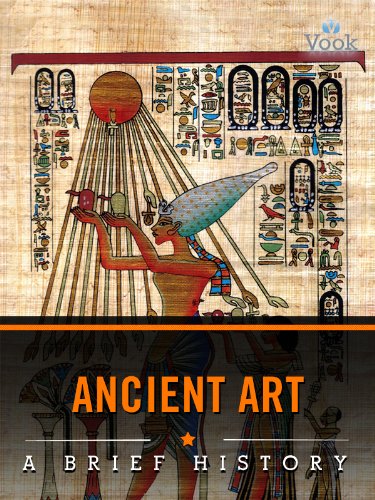
Ancient Art: A Brief History


Ancient Art: A Brief History Overview


"Ancient Art: A Brief History" presents a comprehensive look at Ancient Art in a compact, interactive format.

This digital compendium serves as a reference to the most significant works produced by early societies from 3,000 BC to 500 AD. The creations range from wall etchings to temples and statues widely studies and revered today.

You’ll discover the history behind some of ancient art’s most enduring wonders, including:

  • The Caves of Chavet
  • Stonehenge
  • The Colossus of Rhodes
  • Roman Arches
  • The Scarab
  • Tell Asmar
  • The Parthenon

...and more.


Low Price @ Amazon

Read more>>>

Thursday, June 16, 2011

The Notebooks of Leonardo Da Vinci - Complete


The Notebooks of Leonardo Da Vinci - Complete Overview


The book has no illustrations or index. Purchasers are entitled to a free trial membership in the General Books Club where they can select from more than a million books without charge. Subjects: Leonardo - Notebooks, sketchbooks, etc; Science; Art / Individual Artist; Art / History / General; Science / General;


Low Price @ Amazon

Read more>>>

Wednesday, June 15, 2011

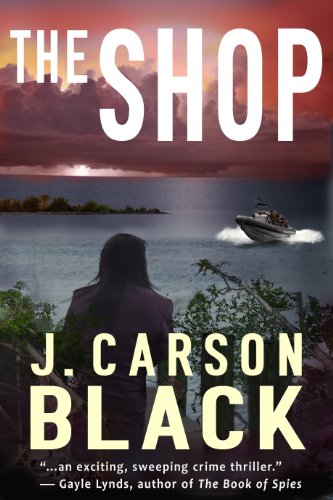
The Shop


The Shop Overview


* * * New Kindle Edition * * *

“THE SHOP is a hair-raising thriller from start to finish. J. Carson Black draws the reader into a world where nothing is as it seems. This book is both spooky and convincing, just what a thriller should be.”
---T. Jefferson Parker, New York Times bestselling author of THE BORDER LORDS

When former Navy SEAL Cyril Landry and his team of assassins enter a chalet in Aspen, Colorado, he recognizes the pop star Brienne Cross asleep on the couch. As he is about to kill her, she wakes and looks into his eyes.

There is that one moment between them. And then she is dead. Someone with a higher pay scale than Landry has been ordering celebrities killed. Now he wants to know why.

At first glance, the shooting death of a police chief in a rundown Florida motel room appears to be an assignation gone wrong. But as detective Jolie Burke plumbs deeper into the crime’s murky undercurrents, she unveils a conspiracy shocking in its scope.

In her relentless pursuit of justice, Burke follows a byzantine path that will take her from the lottery-driven fantasies of a yard maintenance worker to a Panama City Beach missing-persons case and finally to the island compound of her estranged uncle--the Attorney General of the United States.

The death of a celebrity in Aspen has set the table for an orgy of death, destruction, and infamy. As the stakes rise, Jolie finds herself teamed with a killer. Only Jolie and her unlikely partner, Cyril Landry, can dismantle the shadowy entity known as The Shop--before it strikes again.

"Infused with an original voice and packed with compelling characters, J. Carson Black’s THE SHOP is a thriller to pay attention to."
----David Morrell, New York Times bestselling author of THE BROTHERHOOD OF THE ROSE

"Fresh and imaginative, J. Carson Black’s THE SHOP is a riveting read and a compelling tale of character. From FBI agents to local cops, from heroes to villains, THE SHOP is an exciting, sweeping crime thriller that will linger in your mind for a long time."
---Gayle Lynds, New York Times bestselling author of THE BOOK OF SPIES


Low Price @ Amazon

Read more>>>

Monday, June 13, 2011

The Night Walk Men


The Night Walk Men Overview


Three-year old Gabriela plays with her twin brother on a train platform. Blind sax man, Braille the Rail, meets with an old, old friend. The earth rumbles beneath them all: the promise of an approaching locomotive. Now, two mysterious strangers, both of them acting in the interest of an otherworldly sense of duty, will decide their fate over a cup of tea.


Low Price @ Amazon

Read more>>>

Sunday, June 12, 2011

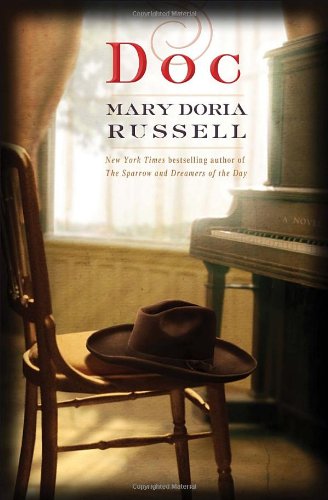
Doc: A Novel


Doc: A Novel Overview


The year is 1878, peak of the Texas cattle trade. The place is Dodge City, Kansas, a saloon-filled cow town jammed with liquored-up adolescent cowboys and young Irish hookers. Violence is random and routine, but when the burned body of a mixed-blood boy named Johnnie Sanders is discovered, his death shocks a part-time policeman named Wyatt Earp. And it is a matter of strangely personal importance to Doc Holliday, the frail twenty-six-year-old dentist who has just opened an office at No. 24, Dodge House.
 
Beautifully educated, born to the life of a Southern gentleman, Dr. John Henry Holliday is given an awful choice at the age of twenty-two: die within months in Atlanta or leave everyone and everything he loves in the hope that the dry air and sunshine of the West will restore him to health. Young, scared, lonely, and sick, he arrives on the rawest edge of the Texas frontier just as an economic crash wrecks the dreams of a nation. Soon, with few alternatives open to him, Doc Holliday is gambling professionally; he is also living with Mária Katarina Harony, a high-strung Hungarian whore with dazzling turquoise eyes, who can quote Latin classics right back at him. Kate makes it her business to find Doc the high-stakes poker games that will support them both in high style. It is Kate who insists that the couple travel to Dodge City, because “that’s where the money is.”

And that is where the unlikely friendship of Doc Holliday and Wyatt Earp really begins—before Wyatt Earp is the prototype of the square-jawed, fearless lawman; before Doc Holliday is the quintessential frontier gambler; before the gunfight at the O.K. Corral links their names forever in American frontier mythology—when neither man wanted fame or deserved notoriety.

Authentic, moving, and witty, Mary Doria Russell’s fifth novel redefines these two towering figures of the American West and brings to life an extraordinary cast of historical characters, including Holliday’s unforgettable companion, Kate. First and last, however, Doc is John Henry Holliday’s story, written with compassion, humor, and respect by one of our greatest contemporary storytellers. 

Doc: A Novel Specifications


A Letter from Author Mary Doria Russell
For the past three years, when people asked what my next novel is about, I've only had to say four words. “It's about Doc Holliday.” You mention Doc Holliday to guys especially and they just light up. “Oh, man! I love Doc!” they say, and they often mention Val Kilmer's portrayal in the movie Tombstone.

I love that movie, too, but when I write characters, I'm really writing about whom and what they love. The shining silver wire that runs through Doc is John Henry Holliday's love for his mother.

Alice Holliday was 22 when her son was born near Atlanta in the summer of 1851. She was still in mourning for her firstborn, “a sweet little girl who lived just long enough to gaze and smile and laugh, and break her parents' hearts.” I'm sure you can imagine her distress when her second child was born with a cleft palate and cleft lip. Even today, when you know clefts can be repaired, they're a shock.

In 1851, such children commonly died within weeks, but Alice kept her boy alive, waking every hour to feed him with an eyedropper, day and night, for eight long weeks. Think about that exhausted young woman and the baby with the hole in his face. Locking eyes. Struggling to stay awake. Struggling to stay alive...

When the infant was two months old, his uncle Dr. John Stiles Holliday performed a successful surgical repair of the cleft--an achievement kept private to protect the family's reputation. You see, in the 1850s, the Hollidays were Georgia gentry whose large extended family would become the O'Haras, Wilkeses and Hamiltons in Gone With The Wind. (Margaret Mitchell was Doc's cousin, twice removed.) These were people who took “good breeding” seriously, and birth defects were a source of familial shame--for everyone but Alice.

Alice and her son became intensely close. She invented a form of speech therapy to correct his diction. She was a piano teacher who introduced him to the music that would become their great shared passion. She home-schooled him until she was sure his speech wouldn't be ridiculed, then sent him to a local boys academy, where he excelled in every subject. In the midst of our nation's ugliest war, she raised a shy, intelligent child to be a thoughtful, courteous gentleman and a fine young scholar who would earn the degree of Doctor of Dental Surgery before he was 21.

Alice didn't live to see him graduate. She died of tuberculosis when John Henry was 15. The loss was staggering, and when he, too, developed TB, he knew exactly what kind of awful death he faced. Hoping dry air and sunshine would restore his health, he left everyone and everything he loved, and went West. He was only 22 when he left Atlanta in 1873.

The Doc Holliday of legend is a gambler and gunman who appears out of nowhere in 1881, arriving in Tombstone with a bad reputation and a hooker named Big Nose Kate. But I have written the story of Alice Holliday's son: a scared, sick, lonely boy, born for the life of a minor aristocrat in a world that ceased to exist at the end of the Civil War, trying to stay alive on the rawest edge of the American frontier.

John Henry Holliday didn't have a mother to love him when he was grown, so I have taken him for my own. My fondest hope for Doc is that it will win for him the compassion and respect I think he deserves. Read it, and weep.


Low Price @ Amazon

Read more>>>

Saturday, June 11, 2011

The Rough Riders


The Rough Riders Overview


This book was converted from its physical edition to the digital format by a community of volunteers. You may find it for free on the web. Purchase of the Kindle edition includes wireless delivery.


Low Price @ Amazon

Read more>>>

Friday, June 10, 2011

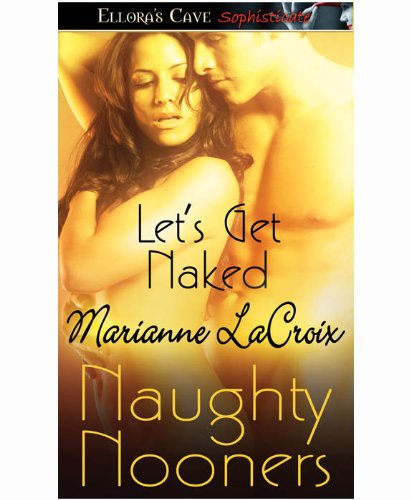
Let's Get Naked


Let's Get Naked Overview


Maddie is a thirty-nine-year-old divorcee forced to start over again with her sex life. She resorts to an online romance with a man while fantasizing about her much younger next-door neighbor, Ryan. When her online friend suggests they meet, the last person Maddie expects is the very man she’s been lusting after. Ryan’s plotted her seduction for months—and now it’s time for them both to live out a few sexual fantasies


Low Price @ Amazon

Read more>>>

Thursday, June 9, 2011

Containment


Containment Overview


As Earth's ability to support human life diminishes, the Global Space Agency is formed with a single mandate: protect humanity from extinction by colonizing the solar system. Venus, being almost the same mass as Earth, is chosen over Mars as humanity's first permanent steppingstone into the universe. Arik Ockley is part of the first generation to be born and raised off-Earth. After a puzzling accident, Arik wakes up to find that his wife is three months pregnant. Since the colony's environmental systems cannot safely support any increases in population, Arik immediately resumes his work on AP, or artificial photosynthesis, in order to save the life of his unborn child. Arik's new and frantic research uncovers startling truths about the planet, and about the distorted reality the founders of the colony have constructed for Arik's entire generation. Everything Arik has ever known is called into question, and he must figure out the right path for himself, his wife, and his unborn daughter.


Low Price @ Amazon

Read more>>>

Tuesday, June 7, 2011

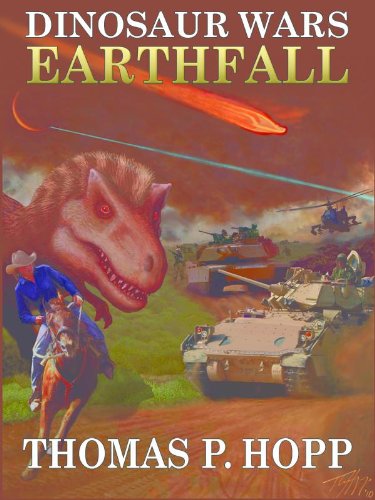
Dinosaur Wars: Earthfall


Dinosaur Wars: Earthfall Overview


Star Wars meets Jurassic Park as dinosaurs return to earth from space.


Low Price @ Amazon

Read more>>>

Monday, June 6, 2011

Surviving the Fog


Surviving the Fog Overview


Have you ever been to summer camp? What would you do if almost all of the adults left “for a few hours” and they had not returned a week later? What would you do if no one’s cell phone worked and your parents never showed up to take you home? What would you do if you realized that the area was surrounded by a mysterious brown fog that was dangerous? How would you survive the winter? How would you get more to eat?
This is what Mike, John, Desi and the other campers have to contend with in Surviving the Fog.
Warning: sexual situations, cursing, brief violence


Low Price @ Amazon

Read more>>>

Sunday, June 5, 2011

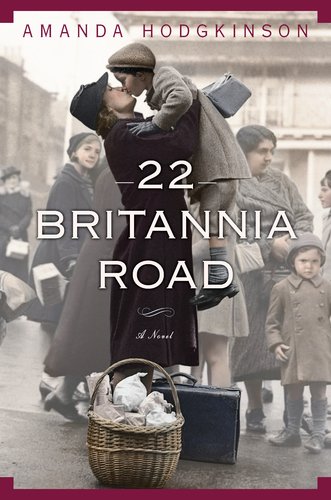
22 Britannia Road: A Novel


22 Britannia Road: A Novel Overview


A tour de force that echoes modern classics like Suite Francaise and The Postmistress.

"Housekeeper or housewife?" the soldier asks Silvana as she and eight- year-old Aurek board the ship that will take them from Poland to England at the end of World War II. There her husband, Janusz, is already waiting for them at the little house at 22 Britannia Road. But the war has changed them all so utterly that they'll barely recognize one another when they are reunited. "Survivor," she answers.

Silvana and Aurek spent the war hiding in the forests of Poland. Wild, almost feral Aurek doesn't know how to tie his own shoes or sleep in a bed. Janusz is an Englishman now-determined to forget Poland, forget his own ghosts from the way, and begin a new life as a proper English family. But for Silvana, who cannot escape the painful memory of a shattering wartime act, forgetting is not a possibility.

One of the most searing debuts to come along in years, 22 Britannia Road

22 Britannia Road: A Novel Specifications


Amazon Best Books of the Month, April 2011: By the end of World War II, Silvana is a ghost of the wife Janusz once had. She and their 7-year-old son Aurek travel from Poland to England to reunite their family--a family that has been separated for 6 years. That's where 22 Britannia Road, Amanda Hodgkinson's stunning debut novel, begins. As the past unfolds from multiple points of view, it becomes clear that despite their determination to make a fresh start, the hidden secrets of the past threaten to destroy Silvana and Janusz's dreams of becoming a family once again. The irreversible events that passed during their years of separation still linger, including the horrors of war, Janusz's betrayal by a love affair with another woman, and the devastating secret that Silvana will do anything to conceal. Hodgkinson's poetic voice is impossible to forget, and the shocking and hopeful ending of her remarkable historical novel will leave readers reeling--and satisfied. --Miriam Landis

Author Q&A with Amanda Hodgkinson

Amanda Hodgkinson

Q: What drew you to this particular story of Polish World War II survivors living in England?

A: As a child, I was always fascinated when the adults around me talked about World War II. These were older family members who had lived through it and I would try to stay quiet so I could listen without being discovered. Their voices changed to lower registers, there were weighted silences in the conversations, sad looks, secretive whispering and then somebody would notice me and send me out to play, their voice swinging up a register to convey a gaiety they probably didn’t feel. I would go to bed at night, sick at heart thinking about these stories, and wonder how the world ever managed to get back to the normal after that war.

Looking back, I think I never stopped wondering. Years later, I was standing in my kitchen and heard a Russian woman on the radio, describing her experiences of being a child during the war. “We were so hungry,” she said, “we ate the bark of the silver birch trees.” An image came to me, so clear and strong, it was more like a memory than an act of my imagination. I wrote down what I saw; a young woman in a silver birch forest. I had begun to write my novel.

Q: From Silvana’s exile in the forest to the petrol rations in post-war Ipswich, you paint a vivid picture of the novel’s historical settings and events. What sort of research did you do to get the details right?

A: I balanced my own imaginative input with research. I read social history books on the war and the postwar period, including a lot of oral histories on Polish immigrant experiences. I also read wonderful Polish poets like Zbigniew Herbert and Tadeusz Rózewicz, among others. I studied Polish fairytales and classic Polish literature from the nineteenth and early twentieth century. I discovered tango music had been very popular in Poland during the thirties, so I listened to some fabulous clips on YouTube and imagined myself there, in the 1930s, dancing at a club in Warsaw, just like Hanka, one of the characters in the book tells Silvana about. I immersed myself in books, music and literature and then I put aside all research and let my imagination go to work. Whenever I was unsure about a scene, I turned to my own thoughts and feelings, relying on my ability to imagine a moment and on my empathy for the characters, rather than history books, and I think this approach helped me really understand my characters and the time.

Q: What does the title, the address of the home Janusz chooses for his reunited family, represent to you symbolically? Why that particular address?

A: I wanted a very ordinary address. A typical English home. You can find a Britannia Road in most English towns and there is no mistaking the pronounced sense of place in this address. Janusz wants what the address offers. A new life and a new country. Ironically, this address, with its connotations of national identity and pride, also serves to highlight the sense of displacement Janusz, Silvana and Aurek, as an immigrant family, must have felt in a small town in Britain. Another reason I used an address was to show how important home was to the characters. For me, the novel is about finding a home, physically, psychologically and metaphorically. Home is a small word that holds within itself complex meanings. Change one letter and you have the word hope. And Janusz, Silvana and Aurek hope to make a home together.

Q: A powerful theme in this book is the pain of survival—even Janusz, who had a relatively easy escape from Poland, suffers from having outlived Hélène and other loved ones. What personal discoveries did you make about this theme while writing the book?

A: Writing the book and researching it made me very aware of how people are still suffering under wars. The mass movement of displaced people around the world continues and the number of children who are orphaned and families disrupted and broken by war does not diminish.

Q: You do an exceptional job capturing the psyche of young Aurek, who has clearly been traumatized by his experiences. Did you draw from case studies of children with similar experiences, or did you find your way to this character instinctually?

A: I wrote Aurek very instinctively. I felt I knew the boy from the moment I first wrote a small, tentative description of him, crouching in the back garden at 22 Britannia Road. I read Through The Eyes of the Innocents: Children Witness World War II by Emmy E Werner, which conveys the heartbreaking experiences of children, and that fed my own understanding of what Aurek might have been through but really, when I was writing Aurek, I found I could connect with him best on an emotional level. So I wrote what he felt. I tried to go beyond language with him and bring out his primitive sense of survival, his desire to feel loved and his need to love others.


Low Price @ Amazon

Read more>>>

Saturday, June 4, 2011

The Wizard of Lies


The Wizard of Lies Overview


The inside story of Bernie Madoff and his billion Ponzi scheme, with surprising and shocking new details from Madoff himself.

Who is Bernie Madoff, and how did he pull off the biggest Ponzi scheme in history?

These questions have fascinated people ever since the news broke about the respected New York financier who swindled his friends, relatives, and other investors out of billion through a fraud that lasted for decades. Many have speculated about what might have happened or what must have happened, but no reporter has been able to get the full story--until now.

In The Wizard of Lies, Diana B. Henriques of The New York Times--who has led the paper's coverage of the Madoff scandal since the day the story broke--has written the definitive book on the man and his scheme, drawing on unprecedented access and more than one hundred interviews with people at all levels and on all sides of the crime, including Madoff's first interviews for publication since his arrest. Henriques also provides vivid details from the various lawsuits, government investigations, and court filings that will explode the myths that have come to surround the story.

A true-life financial thriller, The Wizard of Lies contrasts Madoff's remarkable rise on Wall Street, where he became one of the country’s most trusted and respected traders, with dramatic scenes from his accelerating slide toward self-destruction. It is also the most complete account of the heartbreaking personal disasters and landmark legal battles triggered by Madoff’s downfall--the suicides, business failures, fractured families, shuttered charities--and the clear lessons this timeless scandal offers to Washington, Wall Street, and Main Street.


Low Price @ Amazon

Read more>>>

Friday, June 3, 2011

Hilda the Wicked Witch


Hilda the Wicked Witch Overview


A fairy-land witch gets transported to our world and struggles to go home.


Low Price @ Amazon

Read more>>>

Wednesday, June 1, 2011

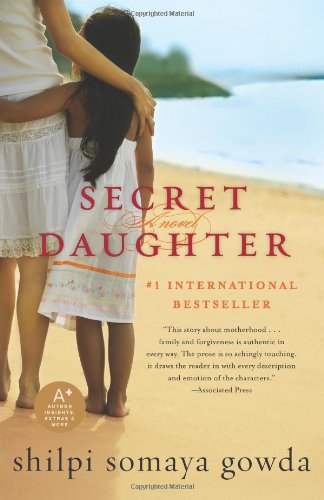
Secret Daughter: A Novel


Secret Daughter: A Novel Overview


Somer’s life is everything she imagined it would be—she’s newly married and has started her career as a physician in San Francisco—until she makes the devastating discovery she never will be able to have children.

The same year in India, a poor mother makes the heartbreaking choice to save her newborn daughter’s life by giving her away. It is a decision that will haunt Kavita for the rest of her life, and cause a ripple effect that travels across the world and back again.

Asha, adopted out of a Mumbai orphanage, is the child that binds the destinies of these two women. We follow both families, invisibly connected until Asha’s journey of self-discovery leads her back to India.

Compulsively readable and deeply touching, Secret Daughter is a story of the unforeseen ways in which our choices and families affect our lives, and the indelible power of love in all its many forms.


Low Price @ Amazon

Read more>>>